





EVERYDAY CARE, THE PALLIATIVE WAY: Equipping care teams to support what matters to residents and families
During National Hospice Palliative Care Week (May 3-9), the BC Centre for Palliative Care (BCCPC) is supporting long-term care (LTC) teams across the province to integrate a palliative approach into everyday care.
Building on the Canadian Hospice Palliative Care Association’s (CHPCA) vision that Palliative Care is Everywhere, this campaign highlights how a palliative approach strengthens and enhances everyday care in long-term care by recognizing that it is a shared responsibility across the entire care team. From healthcare providers to support staff, each role contributes to delivering compassionate, coordinated care.
Through practical tools, education, and real-world strategies, we aim to support teams in working together to provide holistic care for residents and their families throughout their entire journey – from admission through to end of life or transitions in care.
It’s National Hospice Palliative Care Week
May 3 – 9
WHO needs a palliative approach?
✔ Nearly all LTC residents and their families.
✔ 90% of long-term care residents live with progressive conditions and beneft from a palliative approach. (Canadian Institute for Health Information, 2023) while 60% of residents experience significant symptoms in their final months of life. (CIHI; Canadian Hospice Palliative Care Association)
WHEN?
✔ From time of move in
✔ People moving into BC LTC homes live on average 16 months, underscoring the need for early integration (CIHI, provincial data)
WHAT is a palliative approach?
✔ Personalized, holistic care that focuses on quality of life, comfort, and what matters most.
✔ In long-term care this includes meaningful goals of care conversations.
WHY?
✔ Proactive and anticipatory care planning to prevent crisis-driven decisions, reduces unnecessary hospital transfers and improves quality of life. (CHPCA; Choosing Wisely Canada) Families and caregivers feel supported.
WHO provides it?
✔ Everyone in LTC; both clinical and non-clinical staff

A Palliative Approach – It’s More Than You Think
Most people moving into long term care are living with serious, progressive conditions. A palliative approach supports residents and families from the very beginning focusing on comfort, dignity, and quality of life throughout their journey. Learn how LTC teams can integrate palliative principles into everyday care.
A palliative approach starts on move-in day.
Shift your care to a palliative approach (4:29)
A palliative approach in LTC includes:
- Integrating a palliative approach into care from the time a person moves into LTC.
- Using knowledge of life-limiting conditions to anticipate and prepare for change.
- Reviewing goals of care from admission through to care in final days.
- Preparing residents and their families for health condition progression.
- Managing symptoms to reduce sufering and improve overall quality of life.
Resources
- BCCPC – Palliative Essentials in Long Term Care (LTC): Palliative foundations
- Essential Elements Palliative Approach In Long-Term Care in BC (Feb 2025)
- Strengthening Palliative Approach in Long-term Care (SPA LTC)
- A Palliative Approach to Care Infographic (Island Health)
- Myths about palliative approach pamphlet from Strengthening a Palliative Approach (SPA LTC)
- Palliative care fact sheet: WHEN is palliative care? Canadian Hospice Palliative Care Association
- Explore these recources to build confidence in your everyday practice:

Take a moment to reflect:
- How do I approach conversations about death, aging, and chronic illness?
- How can I provide a palliative approach in my role?
- Where do I want to build more confidence? Where would I want to build confidence?

Care Planning: for Today and the Changes to Come
In long-term care, declining health is expected. Proactive care planning helps prepare residents and families for changes, ensuring care refects their values and preferences.
Planning ahead helps avoid crisis decisions.
Three common disease trajectories (3:43)
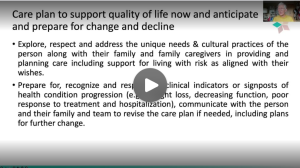
Della Roberts, Palliative Care CNS, discusses preparing for changes to come (0:49)
Dr Trevor Janz on including conversations about future care and expectations in the annual care conference. (2:38)
Take a moment to reflect:
- How can I support residents to live well today while planning ahead?

Goals of Care Conversations
Conversations with residents and families about what matters most to them help guide decision-making in care.
Use everyday conversations with residents and families to learn what matters most to them.
Tender conversations (3:13)
Take a moment to reflect:
- How do I know when a resident’s goals might be changing?
Resources
- BCCPC – Palliative Essentials in Long Term Care (LTC): Goals of care conversations
- You’ve been asked to be a substitute decision maker, now what?
- How to Share Information Effectively Using Ask-Offer-Ask
- Ask-Offer-Ask Framework – IHI Open School (1:17)
- Conversation Guide for Health Care Aides
- What Matters Most To Me worksheet (Vancouver Coastal Health)

Optimizing Comfort and Symptom Managment
Care focuses on recognizing and relieving symptoms early. Addressing comfort is a key aspect of a palliative approach to provide care aligned with the resident’s values and goals for their comfort, functionality, and well-being.
Put comfort into every care decision.
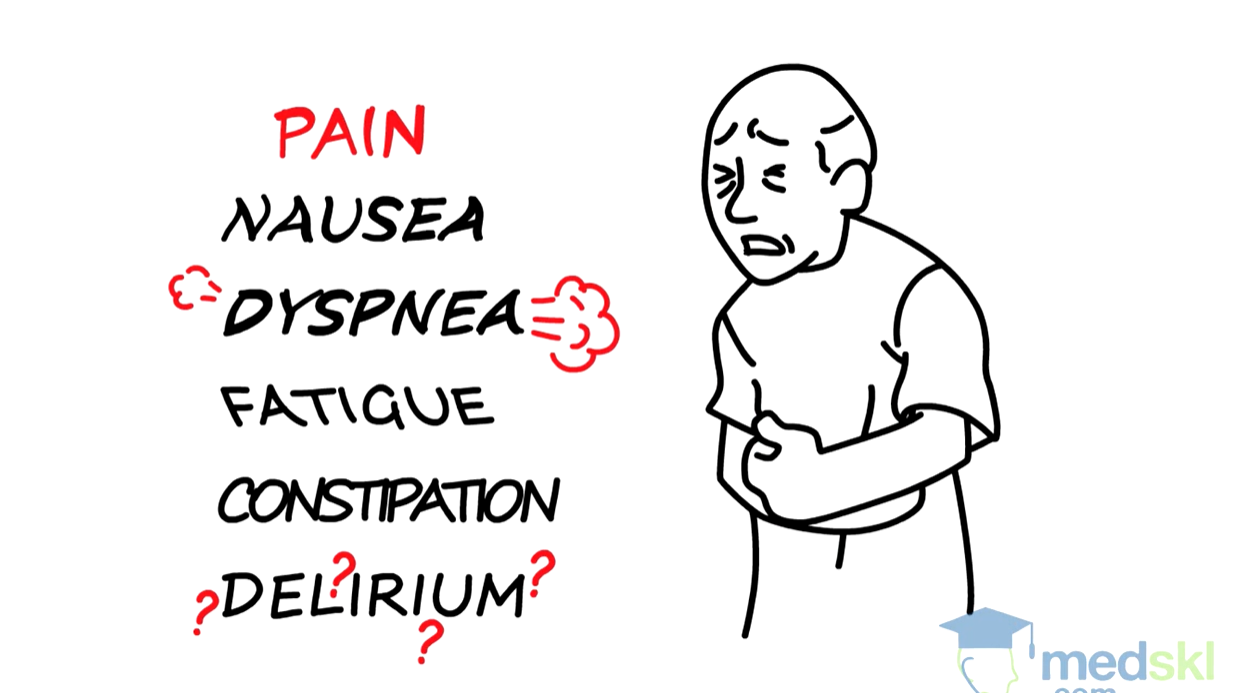
Foundational approach to symptom management (2:58)
Take a moment to reflect:
- How do I recognize and respond to symptoms early?
Resources
- BCCPC – Palliative Essentials in Long Term Care (LTC): Symptom management
- Final weeks and days: What to expect (Canadian Virtual Hospice)
- Healthcare Provider Grief + Self-Care (3:39)
- PAINAD scale for those with cognitive impairment
- Numerical Rating Scale (NRS) for those who can rate the symptom severity
- Faces Pain Scale Revised – alternate to numerical scale
- Healthcare Provider Grief (3:40)
- Symptom management guidelines
- Culturally Safe Care – from the BC Centre for Palliative Care culturally safe ACP modules to learn about strategies to achieve cultural safety in your care.

Grief, Loss and Self-care
LTC teams can support all residents and their families to live well now and prepare for change. Your compassionate support during their dying time and beyond makes all the diference. You can be the bridge!
LTC teams can be a bridge connecting residents and families to community grief and bereavement supports.
Grief & Bereavement for families:
- Hospice Societies – offer a range of services including 1:1 grief support, support groups, and anticipatory grief resources. Find your local hospice society here.
- BC Bereavement Helpline (BCBH) – free and confdential service. Trained volunteers provide emotional support. Can refer people to grief and bereavement services near them.
- S.U.C.C.E.S.S – access grief support in languages other than English.
- KUU-US Crisis Line – access grief support for Indigenous people
- About Grief.ca – national website about grief
Caregiver Support Resources:
- Family Caregivers of BC
- Canadian Virtual Hospice for Caregivers
- Alzheimer Society of BC Helpline – Offers support groups and caregiver support.
- When your loved one has dementia: Roadmap for families (Developed by Dr. Trevor Janz)
Self-care for LTC Clinicians
- Taking Care of Me (Care for Caregivers)
- Wing Kei Care Centre module, “Restorative Practice” from the LTC palliative toolkit about self-care, refection, and team debriefing.
Education
- BCCPC – Palliative Essentials in Long Term Care (LTC): Active dying, grief and bereavement
- Strengthen Your Core! Domain 6: Loss, Grief and Bereavement
- Ontario CLRI online module, “Coping with Grief”, about grief, individual bereavement needs, and responding to grief and loss.

Take a moment to reflect:
- How do I know when a resident’s goals might be changing?
Want more information on a palliative approach to care?
- Health care provider resources and use our filter function to select long-term care resources.
- Subscribe to CentrePoint, BCCPC’s monthly newsletter, for updates on our current initiatives, research, resources and educational opportunities.
